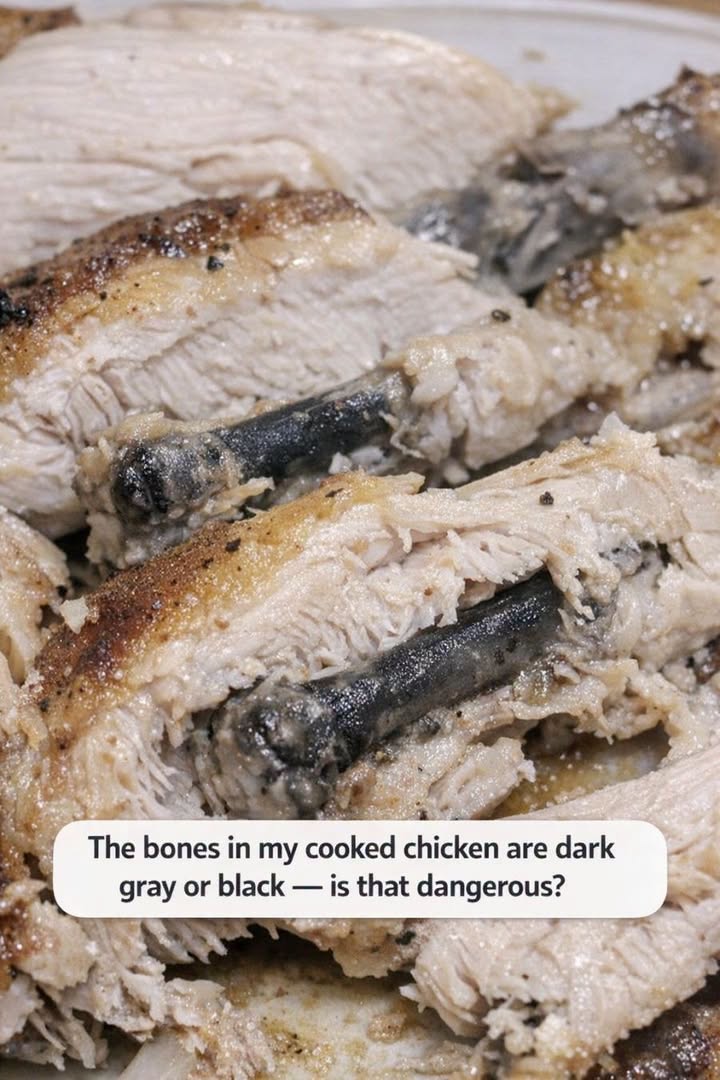
The bones in my cooked chicken are dark gray or black — is that dangerous?

It’s important to note that as long as the chicken is cooked to an internal temperature of 165°F (74°C), it is safe to eat. The USDA specifies that this temperature effectively kills any harmful bacteria, ensuring the meat is safe for consumption regardless of the bone color.

4. How Age, Breed, and Processing of the Chicken Affect Bone Color

The age of the chicken plays a significant role in bone color. Younger chickens, often used for broilers, have softer, more porous bones that allow bone marrow to seep through more easily. This is why their bones might appear darker when cooked.

The breed of chicken can also influence bone color. Some breeds have naturally darker bones due to higher levels of pigmentation in their marrow. Additionally, processing methods like freezing and thawing can cause blood in the bone marrow to migrate and oxidize, resulting in darker bones when cooked.

Packaged raw chicken in a home kitchen before cooking

5. The Role of Blood, Hemoglobin, and Oxygen in Turning Bones Dark

The dark color in bones is largely due to the oxidation of hemoglobin, a component of blood. When chicken is cooked, the heat causes hemoglobin in the bone marrow to oxidize, turning it a dark color. This is a similar process to how meat browns when cooked.

Oxygen plays a crucial role in this process. When blood is exposed to oxygen, it begins to oxidize, and cooking accelerates this reaction. This is why the bones of cooked chicken can sometimes appear dark gray or black, especially near the ends where the bone is more porous.

6. Signs Your Chicken Is Actually Undercooked or Unsafe

While dark bones are usually safe, there are other signs to watch for to ensure your chicken is properly cooked. Chicken that is pink or has a rubbery texture can indicate it is undercooked. Always use a meat thermometer to check that the internal temperature has reached 165°F (74°C).

Meat thermometer inserted into a cooked chicken breast

If the chicken has an off smell, slimy texture, or shows signs of mold, these are indicators of spoilage, and the chicken should be discarded. Proper storage and handling are crucial to prevent contamination and ensure food safety.

7. Visual, Smell, and Texture Checks to Tell Safe Chicken from Spoiled

Visual checks involve looking for any unusual colors in the meat itself, such as green or iridescent hues, which can indicate spoilage. The smell is another critical factor; fresh chicken should have a mild, neutral scent. Any sour or sulfur-like odors suggest the chicken is no longer fresh.

Texture is also important. Fresh chicken should be firm to the touch and not sticky or slimy. If any of these signs are present, it is best to err on the side of caution and not consume the chicken.

Fresh raw chicken on a tray with paper towels and kitchen prep tools

8. Cooking Techniques That Reduce Dark or Bloody-Looking Bones

Certain cooking techniques can minimize the appearance of dark or bloody-looking bones. Pre-soaking chicken in a brine solution can help draw out excess blood from the bones, reducing discoloration. Slow cooking methods, such as braising, can also help reduce the appearance of dark bones by allowing the marrow to cook thoroughly.

Additionally, ensuring the chicken is thoroughly thawed before cooking can prevent uneven heating, which sometimes leads to darker bones. Using a meat thermometer to confirm the correct internal temperature ensures the chicken is cooked safely.

Chicken pieces soaking in a brine bowl on a kitchen counter

9. Why Dark Bones Happen More in Roasted, Grilled, and Frozen Chicken

Roasting and grilling apply direct heat to the chicken, which can cause the marrow inside the bones to heat up and oxidize, leading to darker bones. This is particularly noticeable in chicken that has been frozen because freezing and thawing can cause the blood in the marrow to move and oxidize upon cooking.

The intense heat from these cooking methods can exacerbate the darkening of bones compared to other methods like poaching or steaming, where the heat is more gentle and uniform.

Grilled chicken pieces with char marks on an outdoor grill

10. When to Call a Doctor or Throw the Chicken Away

If you experience symptoms like nausea, vomiting, diarrhea, or fever after consuming chicken with dark bones, it’s important to contact a healthcare professional as these may be signs of foodborne illness.

Throw the chicken away if it has a foul smell, unusual color, or slimy texture before cooking, as these indicate spoilage. When in doubt, it’s always safer to discard questionable chicken rather than risk illness.

11. How to Shop, Store, and Prep Chicken to Avoid Alarming Bone Color

When shopping for chicken, choose cuts that are fresh and have a uniform color. Avoid packages with excessive liquid, which can be a sign of poor storage. Always check the expiration date and ensure the chicken is stored at 40°F (4°C) or below to prevent bacterial growth.

Chicken stored on a refrigerator shelf in a home kitchen

For preparation, ensure the chicken is thawed properly and cooked to the correct temperature. Using marinades or brines can help reduce the appearance of dark bones. Proper handling and cooking techniques will help ensure the chicken is safe and palatable.