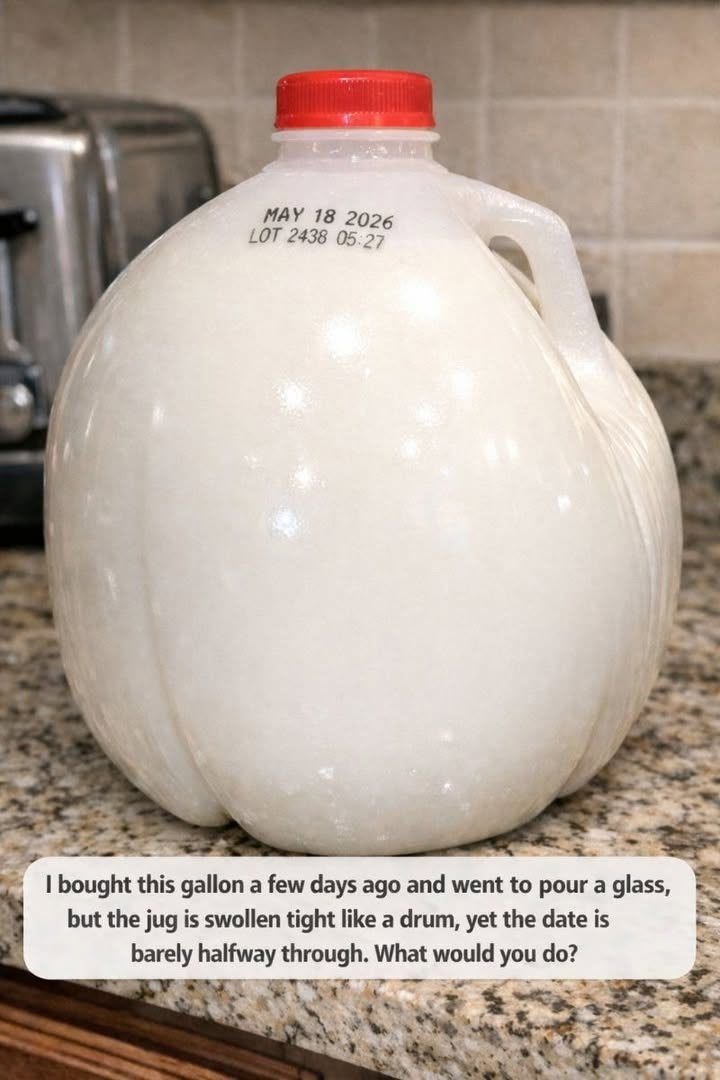
5. Understand What Causes a Milk Jug to Bloat
Milk jugs can bloat due to bacterial fermentation. When bacteria break down lactose, they produce lactic acid and gas as byproducts. This gas builds pressure inside the jug, causing it to swell.
Temperature fluctuations can also contribute to bacterial growth. Keeping milk at a consistent temperature below 40°F (4°C) is crucial to slowing bacterial activity and preventing spoilage.
6. When It’s Definitely Unsafe: Clear Signs of Spoilage
Certain signs indicate that milk is definitely spoiled. These include a sour smell, a lumpy or curdled texture, and a yellowish color. If any of these signs are present, the milk should not be consumed.
Additionally, if the milk tastes sour or unpleasant, it’s a clear indication of spoilage. Consuming spoiled milk can lead to foodborne illnesses, so it’s best to err on the side of caution.
7. Should You Return It, Toss It, or Call the Store?
If you find a swollen milk jug, it’s often best to return it to the store for a refund or exchange. Most retailers have policies in place for such situations, especially if the milk is within its sell-by date.
Contact the store, explain the situation, and inquire about their return policy. Many stores will offer a replacement or refund, as customer satisfaction and safety are priorities.
8. How to Document the Problem for a Refund or Complaint
Before contacting the store or manufacturer, take clear photos of the swollen jug, including the date and any visible issues. Documentation helps substantiate your claim and can expedite the resolution process.
Keep any receipts or proof of purchase handy, as stores may require these for processing a refund or exchange. Having thorough documentation ensures you have a strong case when addressing the issue.
9. When to Contact the Brand or Your Local Health Department
If you encounter recurring issues with a specific brand or suspect widespread contamination, it’s important to contact the brand directly. Many brands have customer service lines or emails to address such concerns.
In cases where you believe there’s a public health risk, contacting your local health department is appropriate. They can investigate the situation further and take necessary actions to protect public health.
10. Storage Mistakes That Can Make Milk Go Bad Faster
Improper storage is a common reason milk spoils before its time. Always store milk in the coldest part of the fridge, typically the back, rather than the door, where temperatures fluctuate more.
Ensure that the fridge maintains a consistent temperature below 40°F (4°C) and avoid leaving milk out at room temperature for extended periods. These practices help maintain the milk’s freshness and safety.
11. How to Protect Yourself Next Time You Buy Milk
To ensure you’re buying fresh milk, check the sell-by date and examine the jug for any signs of damage or tampering before purchase. Store the milk properly immediately after buying it to maintain its quality.
Consider buying milk in smaller quantities if you notice it frequently spoiling before use. This way, you reduce waste and ensure you always have fresh milk on hand.
