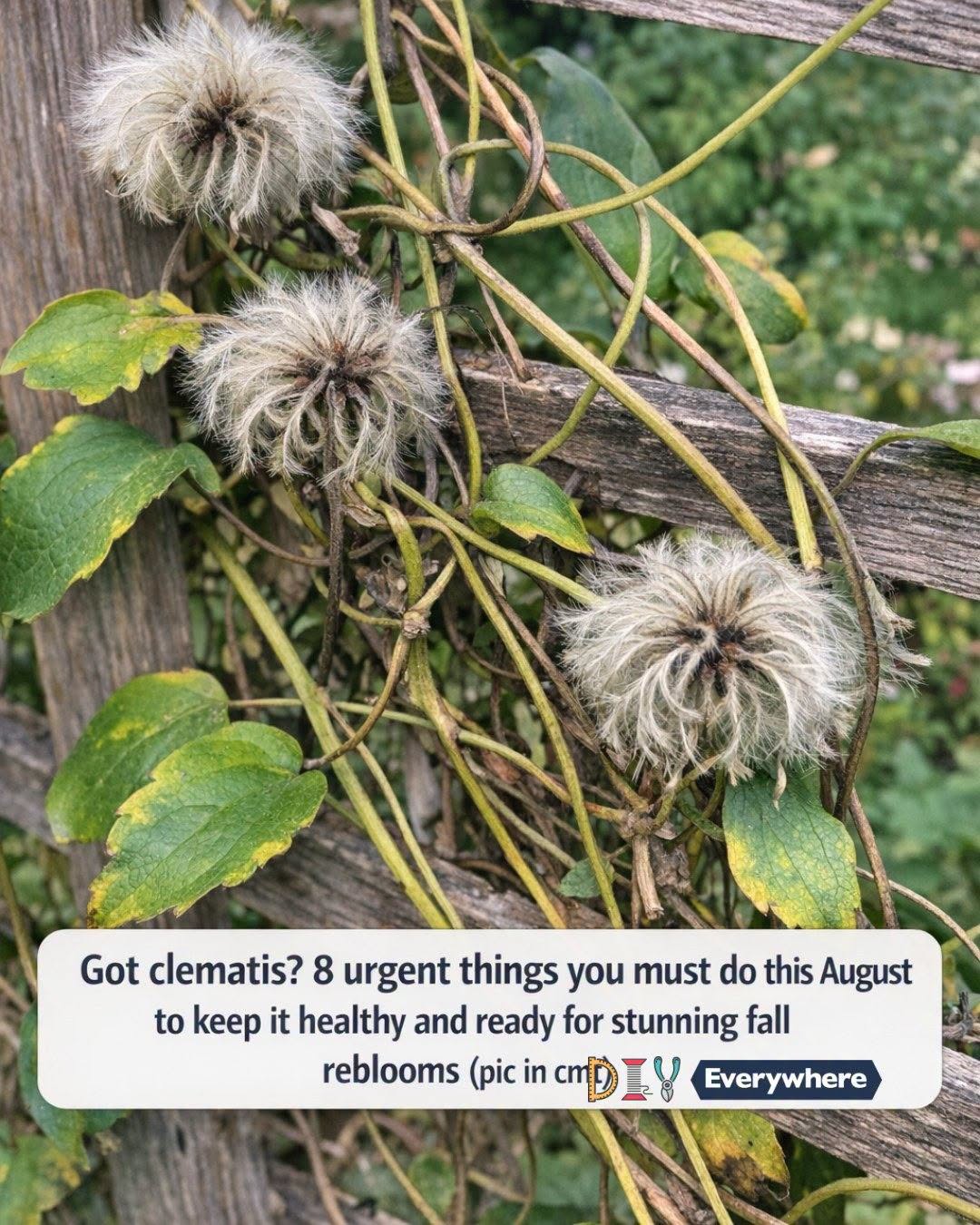
If your clematis is a reblooming variety, August is the time to remove faded flowers before the plant puts too much effort into making seed. I snip just above a healthy pair of leaves or a strong side shoot. On vines that are still actively growing, this simple cleanup often encourages more buds rather than letting the plant coast into seed production.
Do not turn this into a major haircut. You are not trying to reshape the whole plant. You are simply removing the spent bloom and a short section of stem, usually 4 to 8 inches, unless that stem is clearly weak or damaged. If your family likes the fluffy seedheads later in the season, you can always leave a few on. I usually do that toward fall, but in August I mostly prioritize flowers over fluff.
5. Remove diseased, blackened, or wilted stems right away
August is prime time for spotting problems because heat stress can make disease symptoms show up quickly. If you see a stem suddenly collapse, blacken, or wilt from the top down, prune it out immediately with clean pruners. Cut back to healthy tissue, even if that means going down 12 to 24 inches. Wipe blades with rubbing alcohol or a disinfecting wipe between cuts if you suspect disease.