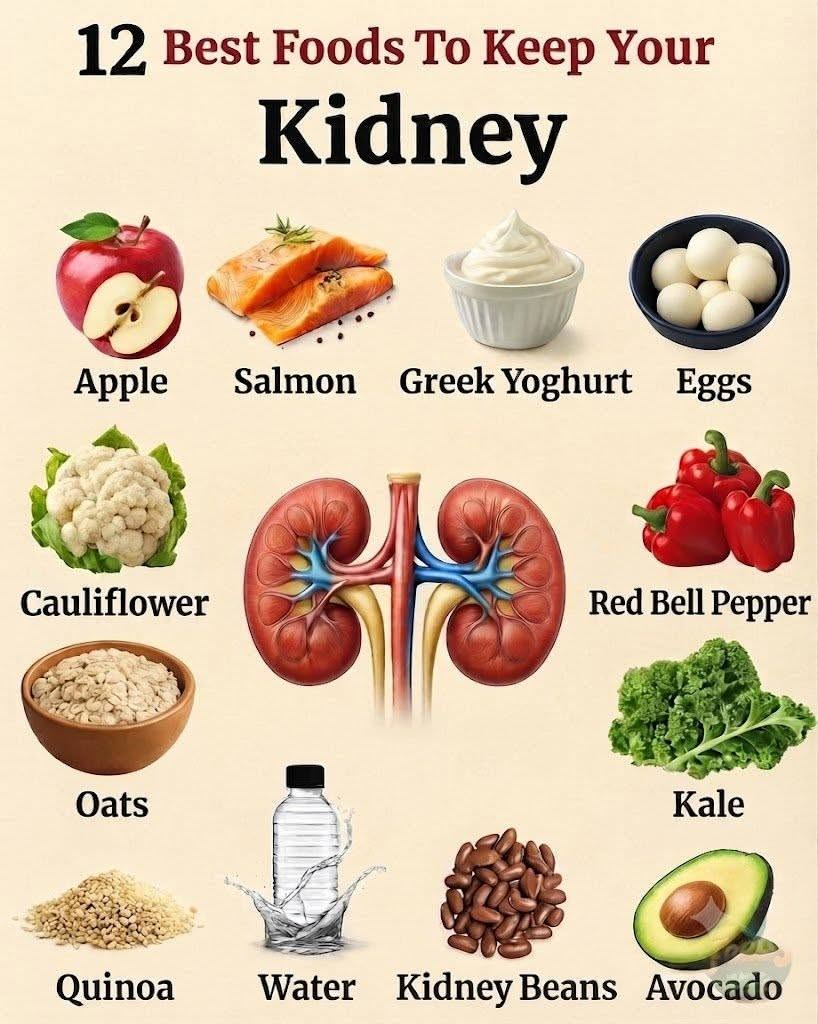
However, more water isn’t always better for everyone.
People with advanced kidney disease, heart failure, or certain other medical conditions may be advised to restrict fluids. If you’ve been given a fluid restriction, follow your healthcare professional’s instructions rather than increasing your water intake on your own.
What About Salt?
One of the most important dietary considerations for kidney health is sodium.
Large amounts of sodium can contribute to higher blood pressure, and high blood pressure can damage the kidneys over time.
Instead of automatically reaching for the salt shaker, try flavoring food with:
- Garlic
- Onion
- Lemon juice
- Black pepper
- Fresh herbs
- Spices
- Vinegar
Also pay attention to packaged foods, sauces, processed meats, canned soups, and salty snacks, which can contain significant amounts of sodium.
A Kidney-Friendly Diet Isn’t the Same for Everyone
This is especially important.
If you already have chronic kidney disease, kidney stones, or another kidney condition, the foods that are appropriate for you may be different from those recommended for someone with normal kidney function.
Depending on your condition and laboratory results, a healthcare professional may recommend adjusting your intake of sodium, potassium, phosphorus, protein, or fluids.
So don’t assume that every food labeled “healthy for the kidneys” is appropriate for you.
