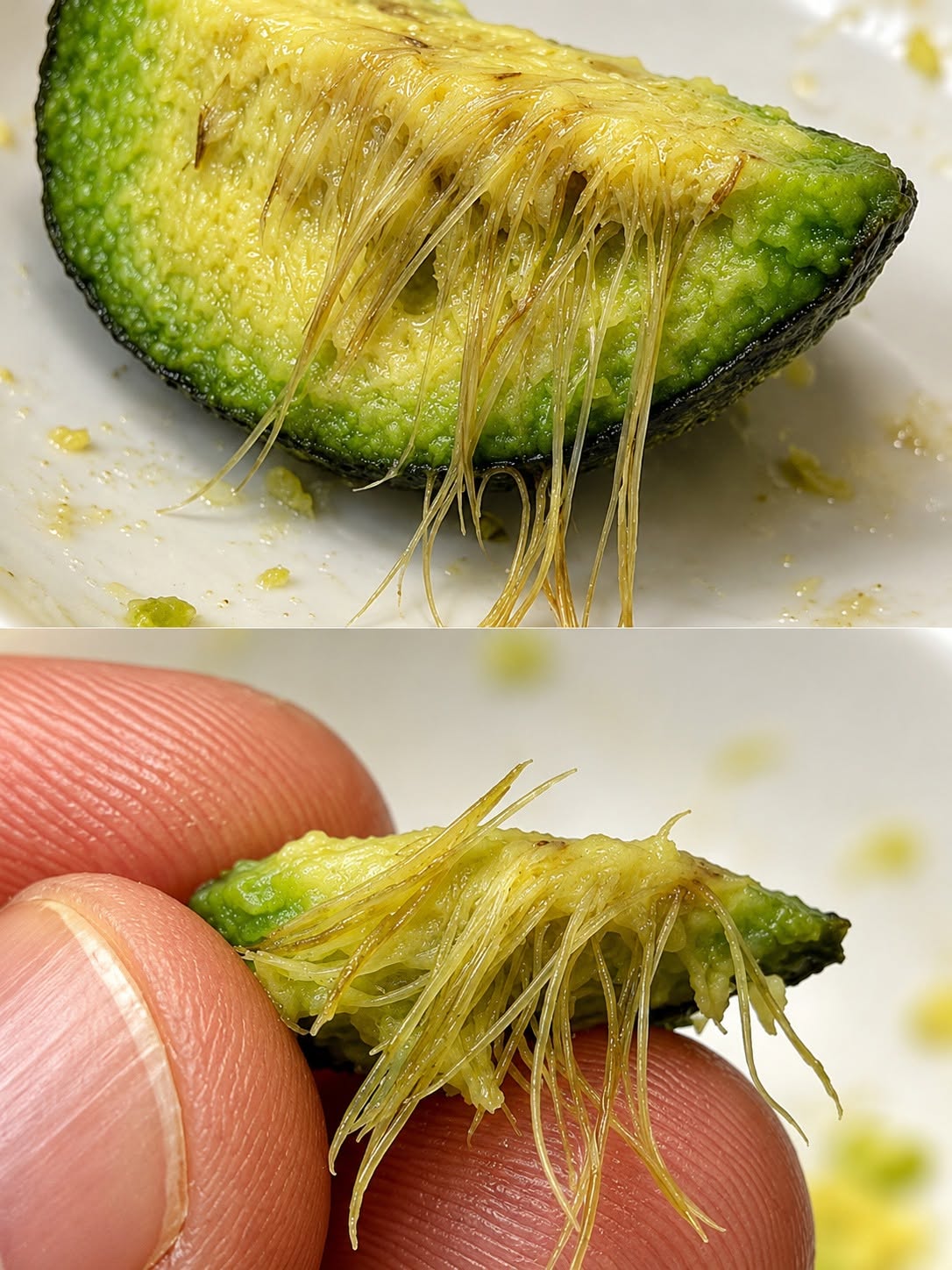
become larger, tougher, or more visible.
That’s when you open an avocado and discover those annoying strings.
Why Are Some Avocados Much More Stringy?
Several factors can contribute to prominent fibers.
1. The Fruit May Come From a Young Tree
Avocado trees change as they mature. Fruit from younger trees can sometimes have more noticeable vascular bundles.
These internal fibers may be thicker and tougher, making them much easier to see when the avocado is cut open.
2. Temperature Can Affect the Fruit
Avocados are sensitive to their growing and storage conditions.
Temperature stress during development or ripening can affect the fruit’s texture. In some cases, the vascular bundles become tougher and more noticeable.
Improper storage conditions can also contribute to changes in texture.
3. The Avocado May Be Overripe
As an avocado becomes very ripe, its soft flesh gradually breaks down.
The tougher vascular fibers don’t break down at