Once avocado flesh is exposed to oxygen, it can gradually turn brown. This is called oxidation, and it’s similar to what happens when you cut an apple and leave it exposed to air.
A small amount of surface browning can often be removed, leaving usable green flesh underneath.
However, discoloration combined with a bad smell, mold, or an unpleasant texture is a different story.
How Can You Choose a Good Avocado?
Picking an avocado at the right stage of ripeness can make a huge difference.
A very hard, bright-green avocado usually needs more time.
A ripe avocado should generally yield slightly when gently pressed in your palm. It shouldn’t feel rock-hard, but it also shouldn’t feel extremely soft or collapse under light pressure.
Avoid squeezing the fruit aggressively because repeated pressure can cause bruising.
How to Ripen an Avocado Faster
Need an avocado to ripen sooner?
Place it in a paper bag with a banana or apple.
These fruits naturally release ethylene, a plant hormone involved in ripening. Keeping them together can help speed up the process.
Once the avocado reaches the desired ripeness, refrigerating it can slow further ripening.
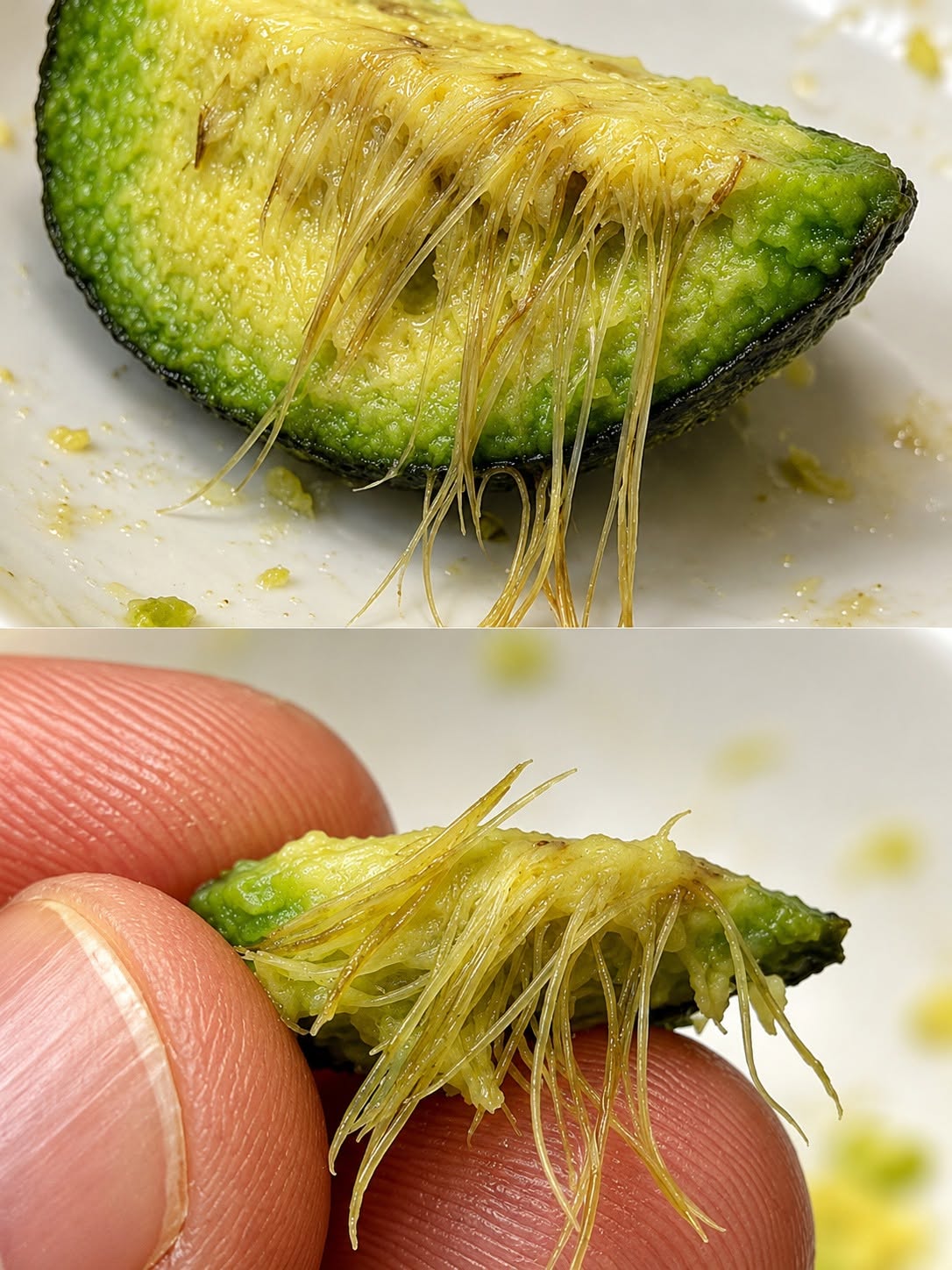
Don’t Judge an Avocado by Its Strings
Finding strings inside an avocado can certainly be disappointing, especially when you were expecting perfectly smooth flesh.
